
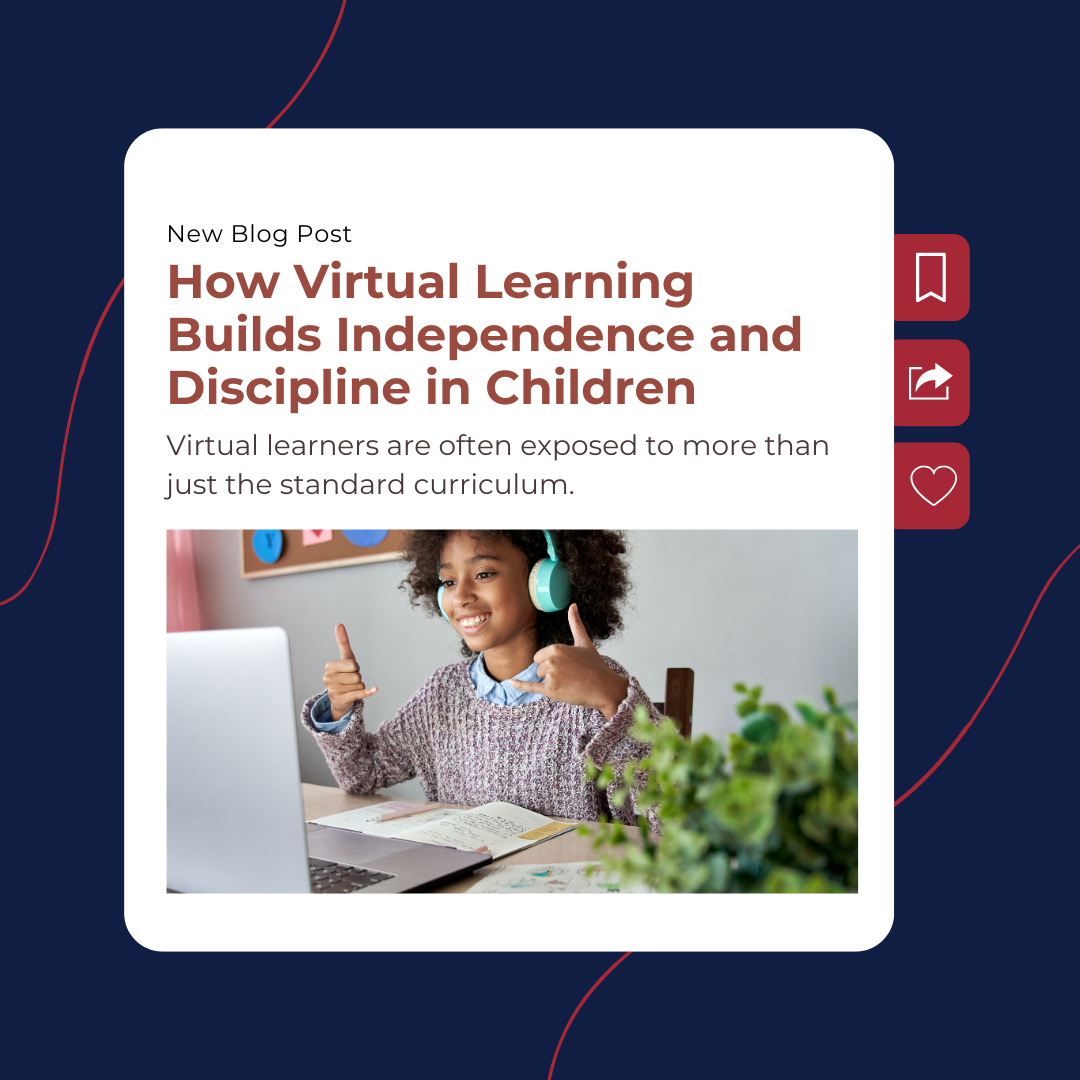
How virtual learning builds independence and discipline in children
Virtual learners are often exposed to more than just the standard curriculum.
The most common question parents ask before onboarding onto our virtual school is how their children will stay up to date when it comes to skills. They ask questions like, "Will they fall behind?"
It's a valid concern and one that deserves an honest answer.
The truth is, virtual learning doesn't put children behind. If anything, it places them ahead in ways that traditional systems sometimes struggle to achieve. Beyond academics, virtual learning builds two critical life skills early on: independence and discipline.
In a virtual setup, learning shifts from being teacher-led to student-driven. A child is no longer just following instructions in a structured classroom for hours on end they are actively participating in their own learning journey. They learn how to manage their time, keep track of assignments, and take responsibility for completing tasks. These are not just school skills; they are life skills.
Independence begins to show in small but powerful ways. A child learns to log into their classes on time, organize their materials, and seek help when they need it. Over time, this creates a sense of ownership.
Discipline naturally follows. Virtual learning requires consistency. There are no bells ringing in the background or teachers physically present to constantly redirect attention. Instead, students learn to create structure for themselves. They understand deadlines, build routines, and develop focus even in environments filled with distractions.
What's important to note is that this does not happen in isolation. A well-designed virtual school provides the right support systems engaging teachers, structured schedules, interactive content, and regular check-ins. Parents are not expected to replace teachers; they simply become partners in the learning process.
And when it comes to skills? Virtual learners are often exposed to more than just the standard curriculum. They become comfortable with technology, digital communication, research tools, and self-paced learning all of which are essential in today's world.
So, do they fall behind? No. They grow differently. They grow into individuals who can think for themselves, manage their time, and take initiative.
Virtual learning is not just about convenience or flexibility. It is about raising capable, confident, and self-driven individuals; children who are prepared not just for exams, but for life.
Curious if Brainybay could be a fit for your child?