
The secret to a winning IGCSE study routine
A winning IGCSE study routine is less about punishment and more about rhythm.
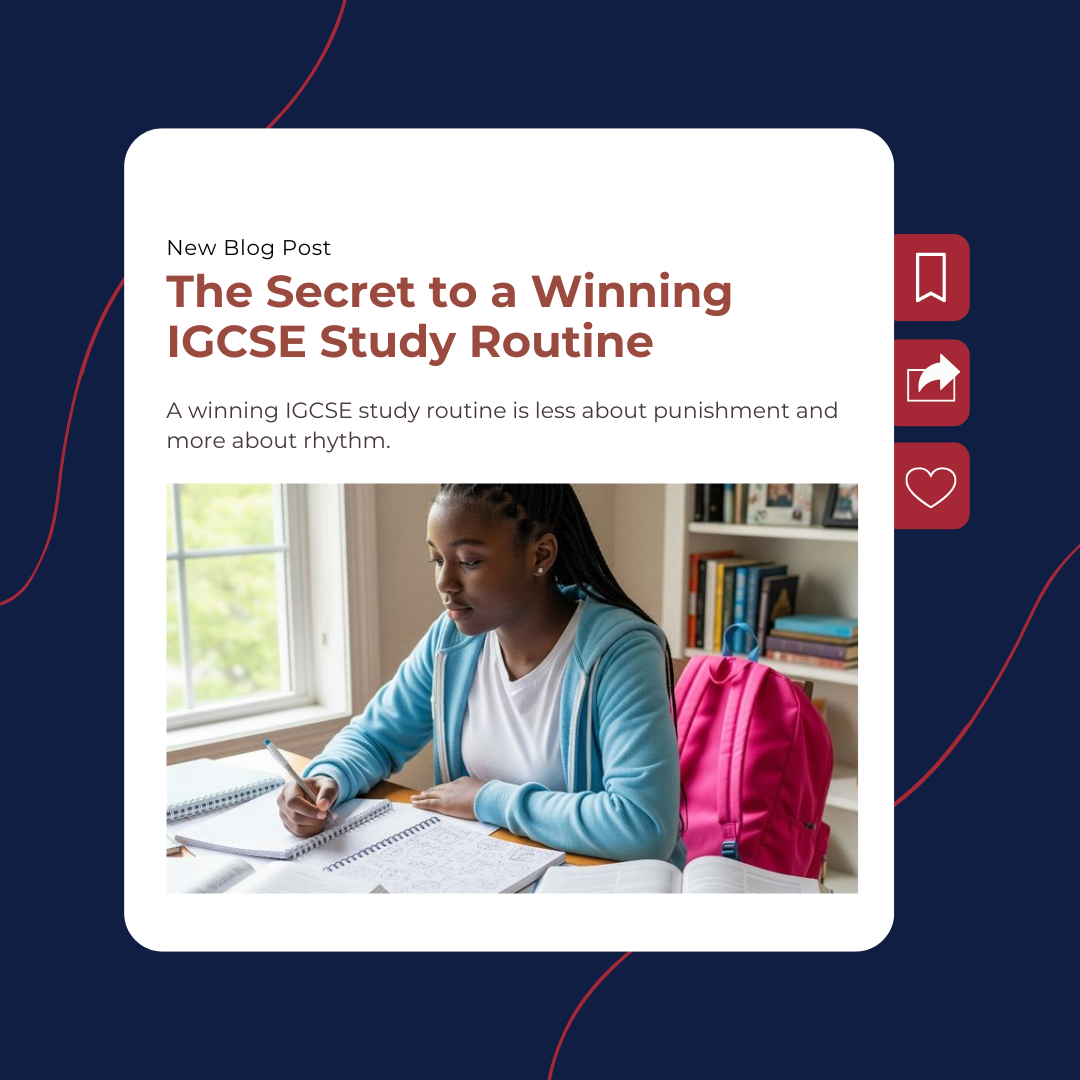
Something about exams makes the nerves flare up and the skin form hives. The pressure, the endless revision, the fear of forgetting everything the moment you sit in the exam room, it is exhausting. Whether you are 13 preparing for your first major assessment or a parent helping your child survive the IGCSE season, exam stress has a way of creeping into the house and settling into every conversation.
The IGCSE curriculum, in particular, can feel overwhelming. The subjects are broad, the expectations are high, and the exam season often arrives faster than students expect. Many learners make the mistake of believing success comes from last-minute cramming and sleepless nights. It rarely does. In fact, the students who consistently perform well are usually not the ones studying the longest hours. They are the ones with a routine that actually works.
A winning IGCSE study routine is less about punishment and more about rhythm. It should help a student feel prepared instead of permanently anxious.
The first thing students need to understand is that consistency beats intensity every single time. Even two focused hours daily can produce better results than random marathon sessions filled with distractions and panic.
One of the most powerful habits an IGCSE student can develop is studying at the same time every day. The brain loves patterns. Once a routine becomes familiar, resistance reduces.
Another common mistake students make is trying to study everything at once. An effective routine breaks subjects into manageable portions. Mathematics may need daily practice because problem-solving improves through repetition. Subjects like Biology or History may benefit from summary notes and active recall.
A good weekly routine also balances difficult and lighter subjects. Placing two heavy subjects back-to-back is a fast way to lose motivation. Many successful students alternate demanding subjects with easier ones to avoid mental fatigue.
Breaks matter more than most students realize. A tired brain stops absorbing information efficiently. Short breaks between sessions improve concentration and memory retention.
Sleep is another underrated weapon during exam preparation. Memory consolidation happens during sleep. Pulling all-nighters may feel productive in the moment, but it usually damages focus, recall, and performance the next day.
Then there is the issue of distractions, arguably the biggest enemy of modern studying. Effective studying requires intentional focus. Sometimes that means putting the phone in another room entirely.
Past papers are also essential in building a strong IGCSE routine. Past papers teach timing, identify weak areas, and help students understand how examiners think.
Parents also play a significant role during the IGCSE journey. Encouragement works better than intimidation. Sometimes students just need someone to say, "You're trying, and I see it."
At the end of the day, a winning IGCSE study routine is not about becoming a robot. It is about creating a structure that makes success feel possible instead of impossible.
Curious if Brainybay could be a fit for your child?