
Why emotional intelligence is becoming more important than IQ
A high IQ alone cannot teach a child how to bounce back from failure or resolve conflict.
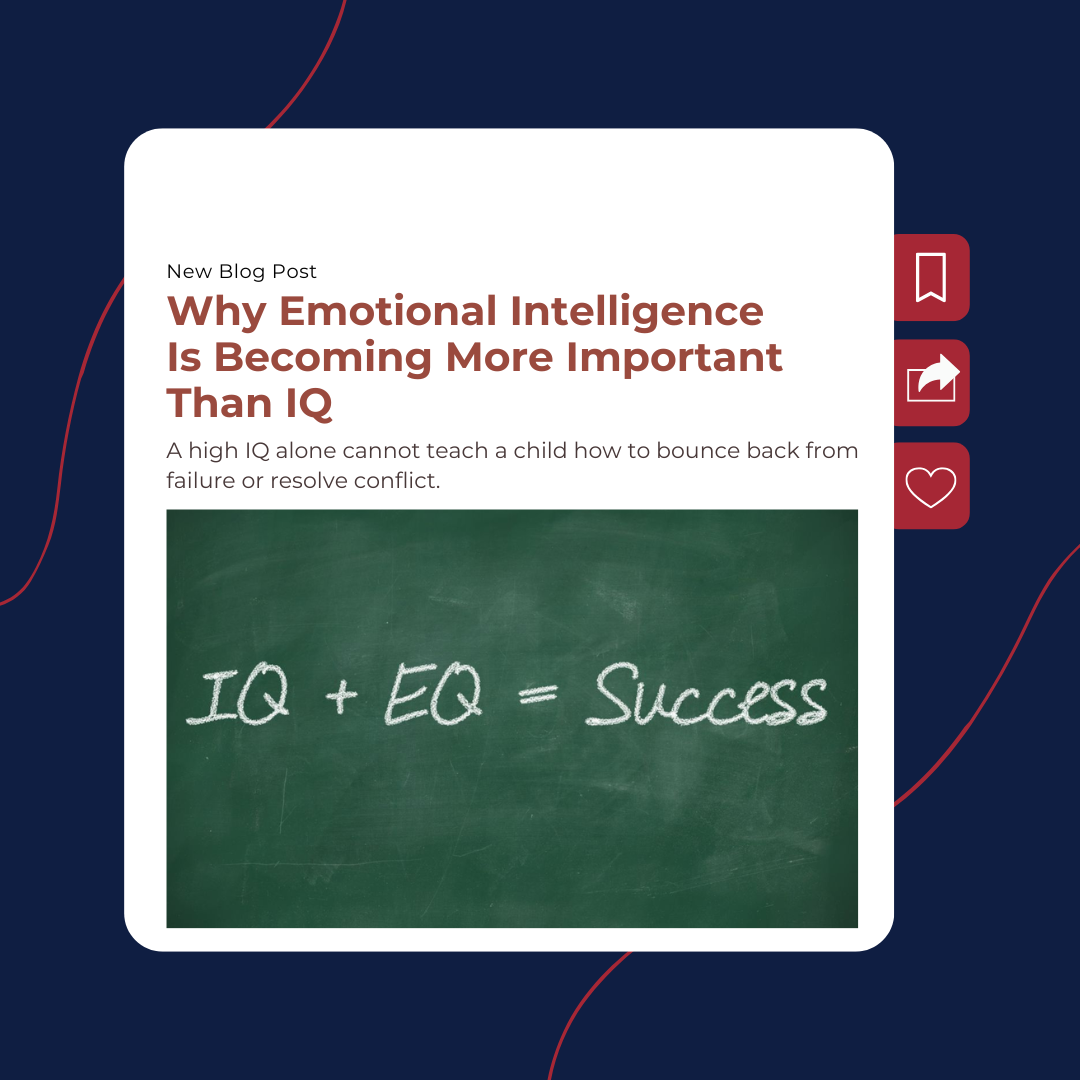
For many years, intelligence was measured by one thing: IQ. Parents celebrated high test scores, schools rewarded academic achievement, and employers sought candidates with impressive qualifications. While intellectual ability remains important, the world has changed. Today, success depends on much more than how well someone performs on an exam.
Increasingly, educators, employers, and psychologists agree that emotional intelligence (EQ) is one of the most valuable skills a child can develop. It influences how we manage emotions, build relationships, solve conflicts, make decisions, and respond to challenges. In many cases, it is emotional intelligence, not IQ, that determines whether someone thrives at school, at work, and in life.
Emotional intelligence is the ability to understand and manage your own emotions while recognising and responding appropriately to the emotions of others. It includes skills such as empathy, self-awareness, resilience, self-control, and effective communication. These qualities help children navigate friendships, work collaboratively, and cope with setbacks in healthy ways.
Think about the last time your child faced disappointment. Perhaps they didn't make the sports team, struggled with a difficult subject, or had a disagreement with a friend. A high IQ alone cannot teach a child how to bounce back from failure or resolve conflict. Emotional intelligence can.
Children with strong emotional intelligence are often better equipped to handle pressure. Instead of becoming overwhelmed by challenges, they learn to regulate their emotions, stay calm under stress, and find constructive solutions.
Emotional intelligence also plays a major role in communication. Whether presenting ideas in class, participating in group projects, or building friendships, children who understand their own emotions and respect the feelings of others communicate more effectively.
The modern workplace is also changing. Employers value employees who can work in teams, adapt to change, demonstrate empathy, resolve conflicts, and lead with confidence. Many of the fastest-growing careers require strong interpersonal skills that cannot be measured by traditional IQ tests.
Technology has made emotional intelligence even more important. While artificial intelligence can analyse data and automate routine tasks, it cannot replace human qualities such as compassion, creativity, ethical judgment, and emotional connection.
For parents, developing emotional intelligence begins at home. Encouraging children to express their feelings, listening without judgement, teaching empathy, modelling respectful communication, and allowing them to solve age-appropriate problems all help build emotional resilience.
At Brainybay International Schools, we believe that true success goes beyond grades. Alongside the internationally recognised Cambridge curriculum, we foster confidence, resilience, empathy, collaboration, and critical thinking in every learner.
Curious if Brainybay could be a fit for your child?